


There’s a familiar way of thinking about intellectual property: someone creates a character, story or world, owns it, and then expands it into new formats. A movie becomes a television series. A comic becomes a videogame. Characters become merchandise. Eventually, if the property is successful enough, it becomes an ecosystem. But the Grand Theft Auto Franchise suggests another path to building valuable IP—one that starts not with ownership, but with cultural influence.
Rockstar Games did not own Scarface. It did not own Miami Vice, Goodfellas, Boyz n the Hood, Menace II Society or Heat.
Yet those properties are embedded throughout the DNA of GTA.
And something interesting happened along the way: Rockstar borrowed their cultural language, transformed it into something it could own, and eventually created an IP ecosystem arguably more culturally powerful than many of the properties that originally inspired it.
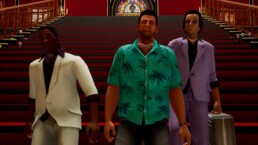
GTA began as a culture remix
Let’s start with a look at Grand Theft Auto: Vice City. The influences are hardly hidden; the pastel suits, speedboats, sports cars, waterfront mansions and cocaine economy immediately evoke Miami Vice. Tommy Vercetti’s journey from criminal outsider to Miami kingpin recalls Tony Montana in Scarface, voiced by Goodfellas Ray Liotta. There are references to Carlito’s Way, along with a soundtrack built around the music that defined the period.
Rockstar wasn’t adapting any of these properties. It was borrowing their cultural language
But the influence didn't travel only in one direction
The remarkable part is that the original properties benefited from this cultural remix. When Vice City arrived in 2002, Miami Vice had been off television for more than a decade. Scarface was almost twenty years old. As millions of younger gamers engaged with the game version of their aesthetic, GTA could become a discovery engine pointing backward.
Play Vice City. Discover Scarface. Watch Miami Vice. Listen to the music. Buy the poster. Adopt the aesthetic.
While these properties didn’t receive any direct royalties from Rockstar Games, they received renewed cultural relevance that increased the value of the original IP through increased distribution and expansion into merchandise and syndication channels.
There are several other examples of this across the early parts of the GTA Franchise; GTA III drew heavily from mafia properties like Goodfellas, Heat and The Sopranos. San Andreas is unabashedly influenced by the aesthetics of 1990s Los Angeles, borrowing cultural language from adventure / crime Boyz n the Hood, Menace II Society, and Colors.
GTA becomes its own reference point
The shift toward self-referential storytelling began in earnest with Grand Theft Auto IV in 2008. For the first time in the series’ history, Rockstar didn’t invent a brand-new city; it returned to Liberty City. This marked a pivotal evolution: the franchise was no longer just parodying classic Hollywood crime cinema; it was actively building its own mythology.
Rather than relying purely on external Hollywood influences, Rockstar began populating its worlds with persistent, in-universe intellectual property. Fictional consumer brands like Sprunk, Pißwasser, and Cluckin’ Bell evolved from throwaway background jokes into multi-decade corporate caricatures. Cultural figures inside the game also took on a life of their own across different eras, most notably the Scottish 80s glam metal band Love Fist. First introduced in 2002’s Vice City, Love Fist’s legacy, music, and apparel continued to pop up across later titles, including easter eggs and collectible merch in GTA IV and GTA V. Recurring characters like radio personality Lazlow Jones similarly bound the franchise together across console generations.
By the time GTA V returned to San Andreas and GTA VI sets its sights back on Vice City (situated within the state of Leonida), the primary target of Rockstar’s nostalgia was no longer just 1980s Miami cinema or 1990s L.A. crime films. It was the memory of playing earlier Grand Theft Auto games.
The legacy callbacks in GTA VI make this clear. The Ocean View Hotel, classic vehicle lines, and long-standing radio brands return alongside explicit monetization strategies, such as the pre-order “Vintage Vice City Pack” DLC. At the same time, the present-day setting targets contemporary social media culture, “Florida Man” tropes, and extreme wealth inequality, keeping the world grounded in modern satire while drawing heavily from its own lore.
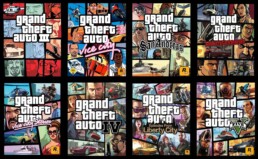
The looping IP ecosystem
Think about the relationship as a loop; an original property establishes cultural language. Years later, those elements and archetypes may be remixed and packaged by other creators into new content, which establishes a new IP while pointing audiences back to the existing properties.
Rockstar has extended this loop by directly commercializing its in-universe IP in the physical world. Fictional brands aren’t restricted to digital easter eggs, as they double as real-world consumer channels. Fans don’t just buy shirts with a studio logo; they buy real-world apparel featuring fake brands like Sprunk, eCola, or iFruit. In GTA Online, Rockstar turned brand identity into interactive community events, such as the “Sprunk vs. eCola” player rivalry, driving massive engagement around fictional products.
Even music distribution has been inverted. Historically, games licensed external music for radio stations. Rockstar reversed this dynamic by co-founding CircoLoco Records. Through this real-world record label, Rockstar releases tracks, signs electronic music artists, and sells physical vinyl globally. The virtual club ecosystem feeds the physical music industry, which then cycles back into the games’ curated radio stations.
As the GTA Franchise has shown, the strongest IP doesn’t simply generate adaptations, it generates a shared cultural language that crosses media and territories.
Be sure to check out our friends at Netflix extended look at GTA VI, releasing August 27th @ 3pm ET.